
Should You Sell Your Home Before Buying Your Next One? A Solano County Move-Up Buyer's Guide"
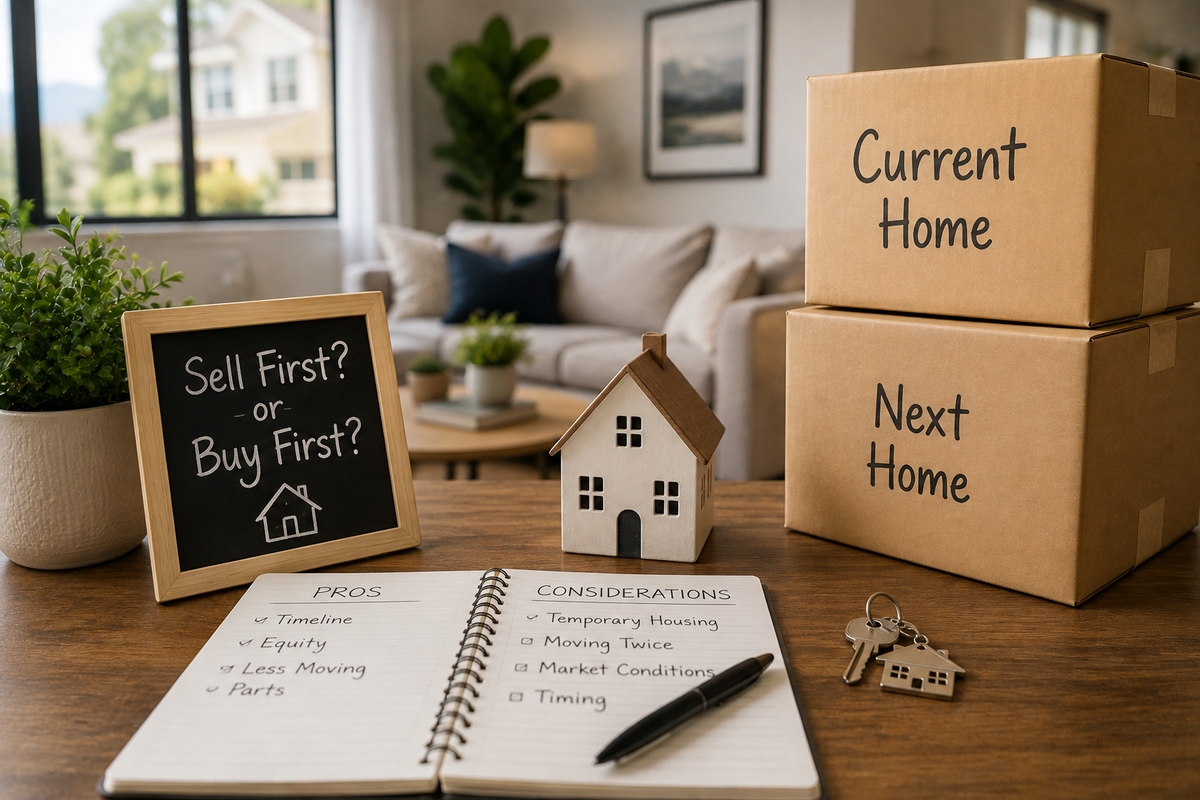
If you already own a home in Fairfield, Suisun City, Vacaville, Vallejo, Benicia, Dixon, or Rio Vista and you're starting to think about your next move, you've probably landed on the same question every move-up buyer eventually asks: do I sell first, or buy first?
I wish I could give you a one-size-fits-all answer. I can't — and honestly, any REALTOR® who tells you there's only one "right" way to do this isn't looking closely enough at your specific situation. The better strategy depends on your equity, your current home's marketability, what you're hoping to buy next, how much uncertainty you can tolerate, and what's happening in our local market right now.
What I can do is walk you through both paths — what tends to work well, what tends to get complicated, and the real estate strategies that help bridge the gap between selling one home and buying another. My goal isn't to talk you into a strategy today. It's to help you understand your options well enough to build a plan before you list your home or start touring properties.
There's No Universal Right Answer — Here's Why
Every move-up situation is a little different. A homeowner in Vacaville with significant equity and no rush has very different leverage than someone in Fairfield who needs their next home to be move-in ready by a specific date. Local inventory, how quickly homes like yours are selling, and how much competition you'll face for your next home all factor into which direction makes more sense.
That's why this decision deserves a real conversation with your agent before it becomes a real estate transaction — not after.
Option 1: Selling First
Potential Advantages
Selling before you buy gives you something a lot of homeowners value more than they expect to: certainty. You know exactly what your home sold for, how much you're walking away with, and what your real budget looks like for the next purchase — instead of guessing.
Other advantages can include:
- Fewer moving pieces at once. You're not juggling two active transactions simultaneously.
- A stronger offer position on your next home. Depending on the situation, you may be able to make an offer without a home-sale contingency, which can be more appealing to a seller — though this isn't guaranteed and depends on the specific transaction.
- A clearer timeline. Once your home closes, you know what you're working with, both financially and logistically.
Potential Challenges
Selling first isn't without its own stress points:
- Finding temporary housing. If your next home isn't ready or under contract yet, you may need a short-term rental or a stay with family.
- Moving twice. Once out of your current home, and again into your next one.
- Storage costs for the gap in between.
- Time pressure. Once you're on a clock, it's easy to feel rushed into a home that isn't quite right.
- Coordinating possession and moving dates, which takes real negotiation and planning between both transactions.
Option 2: Buying First
Potential Advantages
Buying first means you get to move directly from one home into the next — no temporary housing, no double move. Other advantages can include:
- More time to find the right home, without the pressure of a ticking clock on your current listing.
- The ability to prepare and stage your current home properly after you've already moved out, which can make it show better.
- Potentially avoiding the cost and hassle of temporary housing altogether.
Potential Challenges
Buying first comes with its own set of risks:
- Managing two properties or two transactions at once, which requires more coordination and, frankly, more bandwidth.
- Timing uncertainty — what happens if your current home takes longer to sell than expected?
- Carrying costs, where applicable, for maintaining two properties simultaneously.
- Financial complexity in qualifying for a new purchase while still owning your current home — this is a conversation to have directly with your lender, since it goes beyond what I can advise on as your REALTOR®.
Real Estate Strategies That Can Help Bridge the Gap
This is where an experienced agent earns their keep. Depending on your situation and what's happening in the local market, there are several strategies we might discuss:
- Home-sale contingencies — making your purchase offer contingent on the successful sale of your current home.
- Contingent offers — structuring an offer on your next home in a way that accounts for your current home not yet being sold.
- Seller rent-backs — negotiating to stay in your sold home for a period of time after closing while you finalize your next move.
- Negotiating possession dates after closing, so the timing works for your life, not just the paperwork.
- Coordinating escrow timelines across both transactions so they align as closely as possible.
- Preparing your current home for market before you start actively searching, so you're not caught off guard by how quickly (or slowly) it sells.
I want to be clear: none of these strategies are guaranteed to be accepted by another buyer or seller. They're tools we can propose and negotiate — not promises. Whether they work depends on the other party, the terms, and the market conditions at the time.
Why Local Market Conditions Matter So Much Here
This decision isn't just about your personal timeline — it's also about what's happening in Solano County right now. A few things worth understanding as you plan:
- How quickly homes like yours are selling. As of August 2026, homes across Solano County were taking roughly 38 to 49 days to sell on average, according to local market reporting, with inventory and sales activity both trending up compared to the year before. That's meaningfully slower than the frantic multiple-offer pace of a few years ago, which changes how much runway you should build into your plan.
- Current inventory. Solano County has remained a technical seller's market due to limited overall supply, but buyers have more negotiating leverage than they did in recent years.
- Competition for the type of home you want to buy. If you're hoping to move up into a specific neighborhood, price point, or home style — say, a golf-course community in Fairfield or a larger lot in Vacaville — that market may move at a completely different pace than the market for your current home.
- How specific your requirements are for your next home. The more particular your must-haves, the more time you may need to search, which affects whether buying first or selling first makes more sense.
Because Fairfield, Suisun City, Vacaville, Vallejo, Benicia, Dixon, and Rio Vista each have their own micro-markets, "the Solano County market" isn't really one single thing. What's true for a starter home in Suisun City may not be true for a move-up property in Benicia. This is exactly why a local, current market analysis on both sides of your transaction — your home and your next one — matters so much before you decide on a strategy.
Build the Plan Before You Create the Pressure
Here's the most important thing I want you to take away from this: don't list your home or start touring properties until you've thought through how these two transactions will work together.
Once your home is live on the market, or once you've fallen in love with a house you're not positioned to buy yet, you're often making decisions under pressure instead of with a plan. A REALTOR® can help you evaluate both sides of the equation before that pressure exists:
- What is your current home likely to sell for, and how marketable is it in today's market?
- What does the market realistically look like for the type of home you want to buy next?
Once we have honest answers to both of those questions, we can talk through which strategy — or which combination of strategies — makes the most sense for your specific situation.
FAQ: Selling and Buying a Home at the Same Time
Should I sell my house before buying another one?
It depends on your equity, your timeline, your tolerance for uncertainty, and current local market conditions. There's no universal right answer — it's a decision best made after reviewing your specific situation with a REALTOR®.
Can I buy a new home before my current home sells?
It's possible, but it depends on your financial qualification for carrying two properties, which is a conversation to have with your lender. On the real estate side, strategies like contingent offers or home-sale contingencies can sometimes help structure this.
What is a home-sale contingency?
It's a contract condition making your purchase offer dependent on the successful sale of your current home. It can reduce your risk, but it may also make your offer less competitive in certain situations, depending on the seller and the market.
What is a seller rent-back?
A seller rent-back allows you to stay in your home for an agreed-upon period after it closes, giving you more time to find and move into your next home without needing temporary housing.
How long does it typically take to sell a home in Solano County?
As of August 2026, homes across Solano County were taking roughly 38 to 49 days to sell on average, though this varies significantly by city, price point, and property type.
Is it better to buy or sell first in a slower market?
In a market where homes are taking longer to sell, buying first can carry more risk if your current home doesn't sell as quickly as expected. Selling first can offer more certainty, but may require temporary housing. This is exactly the kind of decision that benefits from a local market analysis before you choose a direction.